Latest Posts

Showing posts with label science. Show all posts
If you drink alcohol, you'll likely get drunk. It's pretty simple. But what's not so clear is why this happens. What actually causes the symptoms of being 'drunk'?


Ethanol the Infiltrator

Alcohol as we drink it is typically ethanol - a very special little molecule that, due to it's tiny size, can easily slip throughout our bodies to work it's mischief. Ethanol is made up of only six hydrogen atoms, one oxygen atom and two carbon atoms. It's water soluable, and so has a relatively easy route straight into our blood streams if the stomach and intestines don't help to absorb it. While also somewhat fat soluble, interestingly the body fat content of the drinker can have an affect on how they handle their drink. Those with more body fat typically suffer from worse hangovers the next day, which is why women are typically reported to have less tolerance for alcohol than men. Typically smaller body sizes don't help much either.


So what does ethanol do to make us 'drunk'?

Genrally when you drink some 80% will head into your small intestine, but 20% or so can be absorbed through your stomach walls and straight into your bloodstream. if you have a full stomach this tends to slow down the absorption. Once ethanol is in your bloodstream it gets to work mainly as an inhibitor, flooding up into your brain and interfering with neurotransmitters. When it hits the central nervous system the symptoms of drunkenness like loss of control  or vomiting start to take effect.

As it makes its way around your brain it usually first lingers in the cerebral cortex and slows things down, meaning that the areas that it's responsible for start to be affected. the cerebral cortex handles things like your behaviour, cognitive 'higher' thinking, and muscle movements. As things slow down you might feel less inhibited, which is often why you might find yourself operating at 'base level' and going after things that normally anxiety or common sense might regulate. For example, that third helping of greasy fish and chips might sure look good, or unprotected sex might suddenly seem like a good idea. The slower reactions physically are responsible for the alterations in vision as you process your environment more sluggishly, and why you're generally less sensitive to pain or touch in general.Overall, it's going to take a lot more effort to focus.

If ethanol reaches your limbic system you'll notice that your emotions are effected. This is generally why it's ill advised to drink when you're in a bad mood, as the limbic system typically controls your emotions. With this out of the picture, you'll usually find that your emotions are exaggerated, with intense highs and lows. This, matched up with the blocking of most of your inhibitions, is usually why people tend to get into fights while drunk.

As you drink more and more, more and more of your brain if effected. if it gets deep enough, into the medulla, then you're going to have serious issues. The medulla is the part of your brain that coordinates the things that you do 'without thinking'. If things slow down here you get sleepy and will, eventually, pass out. And quite possibly pee yourself.


Ok then: explain "breaking the seal"

Speaking on peeing yourself, most drinkers will know of the phenomenon of 'breaking the seal': that is, as soon as you start going to the toilet for a pee on a night out drinking, you'll be going every two minutes thereafter. Why is this?
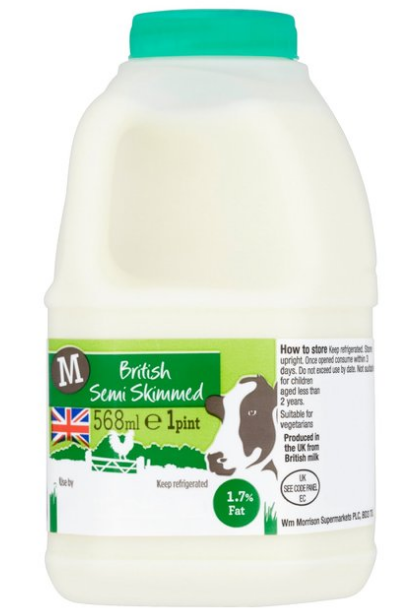
Well one explanation is rather obvious: you're drinking loads of the stuff in one short sitting. For example I like cider and I'll usually grab a few pints on a night out (because they sell them in pints. And I like looking 'manly' with a big pint glass. Why yes I am an idiot.). Now think of the size of a pint glass. Having trouble contextualising it? Try imagining it as pints of milk instead. Yeah, it seems like quite a lot. kind of gross actually. No wonder our bladder is howling.

Another reason for the dodgy bladder control is down to ethanol affecting your pituitary gland. Here it slows down or stops the production of ADH - the Anti-diuretic hormone. This hormone tells your kidneys to conserve water and without it the liquid basically passes right through you. This is also the reason why, despite drinking pints of boozy liquid, you can end up badly dehydrated. So keep drinking normal water along with your alcohol to try and offset this.


And hangovers?

Hangovers are fairly easy to understand if you acknowledge that it's your body's response to you quite literally poisoning yourself. No wonder you feel like crap, you know? But the body is a resilient beast and while it'll be putting you through the ringer as it does, its hangover is a way of curing itself.

For example headaches are generally due to the aforementioned dehydration as your body tries to restore fluid levels. It narrows your blood vessels which restricts the flow of blood and oxygen to your brain. The brain overcompensates in response, dilating its blood vessels and swelling, and the pain receptors in the brain lining start to inform you of the process...painfully. The older you are, the less water you have in your system to begin with, which can make things worse as the alcohol isn't diluted easily.

You might get stomach ache due to the irritation of your stomach and intestine walls (due to the ethanol merrily making its way through them), which causes swelling. This swelling delays the stomach's normal 'emptying' process, which causes a build up of gastric acids and that, combined with the delightful kebab you had the night before, can lead of nausea and vomiting. In addition your body's immune system is responding to an attempted poisoning, so evacuating the toxins in every way it know how seems a sensible option. That's another reason why you might find you lose some control over what comes out of you from either end.

Finally there is evidence that the immune system also produces high levels ot cytokines in their attempt to clean you up from 'infection'. If these levels are abnormally high sometimes it can even affect memory, which is one possible cause why some people can't remember the night before if the drinking was heavy enough.

While it offers a fascinating window into how your body works the hangover is clearly not pleasant, and has been scientifically proven to get worse as we get older, with age 29 being recognised as the time when things get really tough after a night on the tiles.


Now, of course, the disclaimer.

Look: alcohol is a drug that has been deliberately manufactured and cultivated by humans over thousands of years because it makes us feel good. Really we're no different to those lemurs who bite down on millipedes to get high as a kite, and it's natural. But, as you can see above, it can seriously screw with your body and mind and lead to short term and long term health problems. If in doubt, ask Frank - they're a really great resource that doesn't patronise you. My advice? Know your limits, keep your friends around you, always zip a £20 into a separate bit of your bag so you can afford a taxi home, and drink plenty of water - ideally one soft drink between each alcoholic drink. Keep safe out there guys.


Sources
- Drinking & you
- Frank.com
- 8 reasons hangovers really do get worse with age - the Telegraph
- The molecular circus: Your body and how alcohol gets your drunk
- why do we get drunk? (how it works magazine)
-Why do we get hangovers? IFL science


It's widely believed that all humans originated from Africa, which makes the modern physical variations between different races of humans pretty fascinating. How did we evolve to all be so different?

BabyMetal. Not only are they fun music performers, but also own traditionally 'Asian' eyes.

..............................................................................................................................
Now, of course, curiosity about why some humans evolved differently than others has taken science down some damned dark places in the past. For example, when it intermingles with racist social prejudices and concepts of 'evolutionary superiority' you get eugenics and naziism. It would be wrong to approach this kind of subject and not acknowledge this past.
But if you accept that really none of these traits are superior to one another, you can learn something really interesting about how different populations of humans adapted to their different environments, which makes it a pretty fascinating branch of science.

Take, for example, the presence of epicanthic folds. Or, rather 'Asian' eyes vs 'Caucasian' eyes. Why did they appear? What function do they serve?


Biffy Clyro. Also fun music performers, but this time with traditionally 'Caucasian' eyes.


John David Ward of Quora explains why.


"I know this is going to sound really strange and clinical, but please bear with me. 


That distinctive Asiatic eye look is caused by a variety of things, including strong, forward projecting zygomatic arches (the cheek bones just under the eyes), relatively large epicanthic folds, smoothness caused by fat around the eye socket, and a flatter nose bridge. Not everyone has all of these traits, or has them to the same degree, but these traits all tend to reinforce each other visually, leading to a distinctive effect. 

In theory, these effects are presumably caused by a combination of continentality and sexual selection for neoteny (that is, for cuteness). The exact way this happened is still the subject of some controversy, but the correlation is well established.

The story goes that ancestors of the Asiatic peoples (that is, the people who live in modern day East Asia) migrated, in prehistoric times, from somewhere around Central Asia or Siberia to their current locations. That area is the place on Earth which is the farthest inland, and as a result experiences large seasonal swings in temperature. They would have adapted to deal with dry, cold winters, hot, bright summers, and dust. They would have had to deal with dust in the summer and glare from sunlight reflecting off snow in the winter, under conditions where survival was fairly difficult.

If environmental effects were all that mattered, moving south-east like this would have resulted in these Asiatic people losing their distinctive features as an adaptation to their now more temperate environment. But that wouldn't be instantaneous and environment is not the only factor in play. When these prehistoric Asiatic people reached more temperate and coastal areas, which were capable of supporting a larger population, they underwent a population explosion, which allowed sexual selection to take over. The Yellow River Civilization, for instance, which is the ancestor to the modern nation of China, had a relatively high population for many thousands of years.

Sexual selection is mating preference. That is, cuter people (as judged subjectively by the pool of potential mates) are more desired as reproductive partners and therefore are more likely to pass on their genes. Social selection in connection with infanticide in times of famine might also have played a role.

So we can say that features which originally arose as adaptations to an extreme, dusty climate were probably exapted through sexual selection.

Edit: I want to add that epicanthic folds are pretty common around the world, especially in children (they protect one's eyes while they're still developing), and the majority of people have low or flat nose bridges. So it's important to consider who you're comparing these Asiatic eyes to. 

If you're comparing them to Caucasians—which is not synonymous with "white" or "European" but is a collective term for the people who form the majority of the population in countries of the Middle East, Anatolia, Northern Africa, India, Europe, Russia, and former European colonies, who have commonalities, including facial features, regardless of their skin color—keep in mind that Caucasian eyes are not neutral. That is, they do not represent an unchanged original state; they have a distinctive look, too, and there's nothing obvious or inevitable about comparing East Asian eyes to Caucasian eyes rather than anyone else. The eyes of East Asian people look particularly different when you compare them to Caucasians, because the Caucasian peoples went through just about the opposite sort of evolution: their ancestors came from, and for the most part continue to live in, areas where the climate was stabilized by the presence of a nearby body of water (which, due to its tremendous specific heat capacity, tends to mediate year-old temperatures by emitting heat in the winter and absorbing it in the summer).

If you look at an atlas, you'll see for yourself that the north-western quadrant of the Old World is much craggier than the north-eastern quadrant, with a lot of coastline, full of islands (like the British isles and the islands belonging to Italy and Greece), peninsulas (like Denmark, Italy, Little Britain, Iberia, and Scandinavia), bays (like the Bay of Biscay), seas (like the Caspian Sea, the Black Sea, the Red Sea, the North Sea, and the Baltic Sea, and the Mediterranean, most of which are remnants of the ancient inland Tethys Sea before it closed up), and gulfs (like the Persian Gulf and the Gulf of Aden).


Image from Wikipedia, if you didn't recognize the style


So when someone is described as having Asian looking eyes or Caucasian looking eyes, often all we're really saying is that they look like their prehistoric ancestors came from a highly continental area (like the middle of the continent of Asia) or a highly coastal area (like the area around the remains of the Tethys sea), just as when we describe someone as white or black, we're really talking about, via skin color, whether they look like their ancestors came from high latitudes (closer to the poles) or low latitudes (closer to the equator). It doesn't necessarily have anything to do with where their relatives are actually from.

For instance, South Africa is relatively continental (Africa is a much bigger continent than people think). The indigenous people of South Africa, because they live in and have adapted to a location far enough from the equator to have pronounced seasons, and where the coastline is relatively smooth, have eyes that are frequently described as looking "Asian." You can see this in this image of Nelson Rolihlahla Mandela, who is Xhosa, a ethnic group from South Africa:


Meanwhile, Melanesians and Australian aborigines, who migrated into their current locations by island-hopping through Southeast Asia, have eyes that look more "Caucasian," as you can see in this picture of Australian pop singer Christine Anu, who is a Torres Strait islander, and who had a brief role in The Matrix Reloaded:


Likewise, since Japan is an island country, is perhaps not surprising that the Ainu, who are the indigenous minority people of Japan, have facial features that have been described as "Caucasian," despite not being particularly closely related to any of the people of Europe, the Middle East, India, or North Africa.

See this picture of a random Ainu man:


Meanwhile, there are people in Europe who are (presumably) descended from the native people of the more continental region of Europe, called the Russian plain or the East European Plain, who have Asian-looking eyes, including quite pronounced epicanthic folds. Most of these people were, at some point, driven up into Finnland (or restricted to Finnland, since Finnland is sometimes considered part of the East European Plain itself) by the territorial expansion of the Eastern Slavs, so these sorts of features most commonly pop up in Scandinvia, but it can also be found occasionally in Poland (going by Wikipedia). For some reason I've never bothered to research, before routine contact with the Orient was established, European writers tended to describe these as "Tataric" features, despite the fact that they're not really present in Crimean Tatars, at least not today.

The most commonly cited example of Asian-looking eyes among Europeans is Björk Guðmundsdóttir, who, despite being of Icelandic nationality, has, through the genetic lottery, inherited via her Scandinavian ancestors a fairly impressive case:


Keep all this in mind when you think about the case of the anthropologists who examined the remains of Kinnewick Man found in Washington state. They were widely misreported as having stated that he was Caucasian. What they discovered, rather, was that measurement of Kinnewick Man's skull showed evidence of morphological adaptations to a coastal, rather than continental, climate which made him resemble that picture of an Ainu man more than that picture of Björk. That doesn't mean that he wasn't actually Native America. Osteology isn't everything. There's a lot more to a person than their facial features."


Source
- Your local blogger's taste in music :p


Keep in touch....

Remember, you can follow Preludes: Blog of Words us on Twitter and Facebook. Or Subscribe to us on Blogluvin' to never miss a post.
Stay curious!


If you're interested in evolution you might like...


This week's post is brought to you by the fab little wisdom of The New Scientist's: 'Does Anything Eat wasps and 101 Other Questions'...How the Heck to Bruises work?


We've all had a good few bruises in our lives. I don't know about you, but as I kid I could pinpoint the exact origin and history as each bruise, but as I get older I find that they seem to spontaneously sprout on my body without any memory of them at all - our bodies cheerily working away to heal us when our big busy brains are occupied on other things. (Well, there are certain exceptions, such as thigh-high furniture corners that are impossible to not notice when you bounce off them like a howling pinball. I'm looking at you, bed!)

However you get them, bruises are certainly strange, often transitioning from reds to purples to greenish-yellows. As with most things colour-related, this is down to their changing composition.

Bruises occur when small capillaries (that is, blood vessels) break under the skin in response to pressure. Haemoglobin  in the blood gives the bruise it's reddish purplish colour. noticing that something is wrong, our usual little saviours the white blood cells rush in to help the healing process. to do this, they start to break down the Haemoglobin, which creates various breakdown products that start to change the colour of the bruise. the red lessens as the haemoglobin deteriorates and biliverdin and bilirubin - green and yellow respectively - are created. these sit around until these are in turn cleared and finally the bruise fades.

The curious thing about bruises is that they offer a snapshot into what goes on in our body every day, even before we launch ourselves at furniture. this breakdown of haemoglobin happens all the time in our blood when the red blood cells have grown old and expired. Our white cells will break down these cells, and then the remaining waste bilirubin is taken up to the liver where it is converted for bile - the same substance that digests your food and causes that awful acid taste when you vomit. if you have too much waste bilirubin hanging about in your body, it turns the skin yellowish as jaundice.

You might find, especially as an adult, that you've forgotten how you got a bruise, namely because they can appear a long time after the injury itself. This is down to blood again: often the injury might be sustained deep in the tissues of the afflicted body part. Since bruises are effectively leaked blood, sometimes it can take a while for them to reach the surface, and might even appear some distance away from the original injury.

Our bodies , as ever, continue to be equal parts awesome and a little gross. Just maybe hold off on the research for this one, ok?


Source
'Contusion Confusion' - Does Anything Eat Wasps and 101 Other Questions - New Scientist (via reader submissions from Claire Adams, Frankie Wong and Stewart Lloyd)

It will comes as no surprise to my regular readers that I'm a Prof. Brian Cox fan
(Or 'Professor Lovely' as a delightfully snarky friend calls him)

When I heard that he was hosting a live tour I jumped at the chance to see one of his lectures 'for real', and headed to Sheffield City Hall on Thursday 6th Oct, ready to be educated in all things space, not really knowing what to expect.

When the show opened with a video of singing muppets I was, to say the least, a bit confused, but certainly entertained. Talk about an intro!

As it happened, the show was effectively an extension of Brian Cox and Robin Ince's Radio 4 programme 'The Infinite Monkey Cage', where Brian and Robin take a look at the world through a scientist's eyes, with Brian to provide the science and with Robin bringing humor and taking on the role of the interested and self-educated everyman. While the focus was on the lecture style, at times Robin would also interject to lighten the mood, banter, and join in with Brian as well as encouraging audience participation, such as through tweeting science questions. Robin was funny and charming and the two got along very well. Having never heard of 'The Infinite Monkey Cage' before, I was intrigued to check it out (but more on that later).

The meat of the show though was, of course, Brian's main lecture. It focused around the discovery of the Big Bang and how we can detect the size and composition of our incredibly large universe, and drifted into questions about the possibility of alien life on other planets and the probability of finding anything that resembles us. While fans will have been introduced to these concepts in varying details in his other programmes, it still managed to be fresh and was delivered with his classic mix of gentle passion and wonder, and his ability to make the concepts approachable without compromising on precision.This made the whole talk very engaging. While time flew during the lecture, Robin's interjections managed to keep everything fresh, which helped keep the energy levels going. All in all it was a great night out for anything with a curiosity for sciences, especially fans of Brian's wide range of work.

Can I still See Him?

If you'd like to check out the show the good news is that it has proved so popular that Brian Cox Live has been given a series of arena dates as well for 2017. These will be visiting Derby, Nottingham, Newcastle, Glasgow and Wembley in May 2017. There are also a whole host of 2016 dates still on the cards, running up to the 2nd of December, if you can score the tickets. So why not give it a try? I certainly enjoyed myself.


The Infinite Monkey Cage

As I said, Robin and Brian's banter was a lot of fun, so when they mentioned (through muppet-song) that the show was a product of the programme Infinite Monkey Cage naturally I had to go searching to find it.
The great news is that all 14 series' are available to download on BBC radio 4's Iplayer account here.
I've listened to a couple so far and they've been delightful, bringing in interesting guests (both comedians and scientists) to weigh in on a whole variety of subjects. I know where my 5GB data limit will be going on my phone on the morning commute....

It's amazing where a research grant can take you. Often it's not just about Gravitational Waves or stuffy labs, but actually getting out there to improve the lives of global communities.

One such project was headed by the University of Oxford in order to combat one of the alarming side affects of the successful elephant conservation effort. 

So what's the problem?

Fences don't always work...
In many places of Africa, elephant populations are improving after decades of hard-fought conservation efforts and actions against poaching. While this is fantastic news for the growing elephant populations, it has left the local farmers increasingly vulnerable to elephant attacks. Some herds return to old migratory routes only to find small farms in their way which they then plough through, while others find themselves coming up against humans when hunger sets in and the crop-laden fields are too hard to resist. In both cases both animal and human are at serious risk: with their livelihood and safety on the line farmers can do little else but face down the huge creatures themselves, armed with whatever they can find. In some cases this means shooting the elephants, and in others it means making a enough noise in an effort not to shoot them that it simply scares the elephants and gets the farmers killed. Non violent deterrents like cow-bell fences can do little but simply warn farmers that elephants are coming, and more effective methods like tall electric fences are simply far too expensive for the majority of communities. A hungry elephant is a determined one, and a frightened or angry elephant is a horror.

The answer to the problem was surprisingly simple.

Anyone who loves elephants will tell you that we have a lot in common: elephants are intelligent and some people even think that they can mourn. However, their most famous feature is their decades long memory and they, like us, often remember experiences that are unpleasant and will learn from them.

Enter the humble honeybee.

When a person is stung by a bee they learn quickly to spot the signs of the insects nearby and will actively avoid hives - after all, once you've encountered an angry bee it's not a situation that you'd like a repeat of. Elephants, despite their size and tough skin, also hate bees as the tiny creatures can swarm and sting their sensitive eyes, trunks and ears. Like us, they'll give hives a very wide berth indeed, and encourage their friends to do the same. The university looked into this phenomenon, working with local farming communities to experiment with the idea of using bees as a deterrent but in a way that farmers could afford, maintain and actually use to improve their lives in addition to keeping the dangerous animals away in a peaceful faction. The solution was to make a fence of living buzzing beehives.


A fence of langstroth hives

Researchers found that just the sound of bees was enough to keep 94% of animals studied away from the area. Moving on to the real thing, a study of 34 communally-run Kenyan farms found that when they adopted the bee-fence method, only one elephant actually crossed the beehive fence out of a total of 45 attempted raids. It seemed to work.

The main challenge was to figure out a way of creating a beehive fence that fit the needs of the farming communities who owned them. The researchers worked with them and created a pamplet that outlines how to construct and maintain these fences, giving them three design options of increasing effectiveness and price. In each option, the hives are linked together and separated 6m apart. Because elephants would learn to recognise the hives on sight, not every 'fence post' needs to be an active hive, and dummy hives can be created. Each construction needsa thatched roof to keep it shaded and dry, and allows for honey collection so that the farmers can supplement their income. 
The cheapest option is the traditional log hive: effectively a log suspended with a roof. This design makes honey collection difficult and inefficient, but was ideal for poorer farmers who can scavenge the main materials from the landscape. The medium-priced option is the top-bar hive which requires more construction effort and costs around $35 per hive, but allows for easier honey collection and protects the larvae within. Finally the most expensive option was the purpose-designed  langstroth beehives (pictured above) which come in at about $60 per hive, but are the most sophisticated examples for honey collection and provide the greatest quality honey. The farmers have the ability to pick the option that suits them best while also investing in a new form of income in the form of Elephant Friendly Honey.


Construction of a top bar hive


In short, this simple solution saves lives; human, elephant and even bee. What's not to love?

It may have taken a whole research project to bring it to light, but this simple solution is just about as natural and wholesome as you can get.

So now you know. If life gives you trouble....


Sources
 - REF Impact case study: UOA05-20 Using Honey bees as an effective deterrent for crop raising elephants.
-Beehive Fence Construction Manual
- Using honeybees to keep elephants out of farmer's fields
-BBC Earth news: beehive fence deters elephants
This week I wanted to share with you a little something I found while wandering around the science side of Tumblr: probably the best takedown of evolution's critics that I've read.

[P.s - i had no idea about the aortic arch - how fascinating!]

MadSciences

Whenever someone tries to claim that evolution is a lie, I send them a picture of platybelodon.


1. It’s an excellent example of transitional evolution.
2. It’s a mess who would intentionally do this and why
3. It makes them piss themselves a little.

“Evolution is just a theory-”


Fraternalwinandidiots:

Not to be rude, but evolution is just a theory, albeit a probable one. 
You can’t prove it, the only thing you can do is disprove it, which is what good scientists are supposed to do, try to disprove their theory.


MadSciences

Ah, but that’s the thing; A scientific theory IS a proven fact, and evolution is a very good example of an undeniably true one!
I’ve been meaning to write a post about what the meaning of a scientific theory is, and this seems like a good opportunity.
In science we have theories, and we have laws. It’s a very common misconception that a scientific theory is a an unproven hypothesis. This is understandable, but leads to a fundamental misunderstanding of how science works. A scientific theory isn’t the same as what we commonly refer to as a ‘theory’. Here’s a definition:
A scientific theory is a well-substantiated explanation of some aspect of the natural world that is acquired through the scientific method and repeatedly tested and confirmed through observation and experimentation
Compare this to the definition of a scientific law:
A scientific law is a statement based on repeated experimental observations that describes some aspects of the universe. A scientific law always applies under the same conditions, and implies that there is a causal relationship involving its elements.x
This means, basically, that a law summarizes observations about some sort of natural phenomena (usually mathematically). A good example is Newton’s law of gravity! 

Newton’s Law of Gravity explains through mathematics how different bodies react to each other because of this force we call gravity, both on earth and in space, but it doesn’t explain why it happens or even what gravity actually is. No explanation, therefor a law!
Then we have theories, which not only document phenomena, but give explainations as to why these phenomena happen and what they are. A scientific theory requires more testable evidence than a law, and usually encompasses multiple laws and explains them more thoroughly. For example, Albert Einstein’s theory of relativity.
Newton’s law of gravity was testable, but it was only after Einstein proposed the theory of relativity that we started to understand what gravity actually is and how it functions. Einstein was able to give us explainations mathematically for why the laws of physics work as they do. Explanations for how it worked, therefor a theory!
(It’s also important to remember that a scientific theory and a scientific law are two very different things, and one can never become the other. A theory will always be a theory, and a law will always be a law.)

One of my favorite examples of this is the laws of Mendelian inheritance. 
Long before we knew what genetics were, farmers were breeding for favorable traits. They didn’t know where they came from or how they were passed from one organism to the next, but they knew that if they bred a large dog with another large dog, they’d get large puppies, and they knew that if they bred only their best produce that their plants would produce better produce in the future.
Gregor Johann Mendel started conducting experiments by hybridizing pea plants, and was able to prove that this consistently happened. By doing this he created three separate laws that all fall under the Laws of Inheritance; The Law of Segregation, the Law of Independent Assortment, and the Law of Dominance. It gets a little complicated here and I’m not an expert on DNA, but I’ll try to summarize.

The Law of Segregation states that all organisms contain two alleles for each trait, and that those separate during meiosis so each gamete only contains one of them. That means that offspring receives a pair of alleles from its parents for each trait, resulting in one allele for each trait from each parent. For example, a calico cat and a tabby may breed and produce 4 tabby kittens, but all of those kittens will also carry the genetic information of a calico.

The Law of Independent Assortment states that alleles for these traits are passed independently of one another during gamete formation. For example, if the calico is a manx and the tabby is a scottish fold, the kittens can inherit a short tail without inheriting their calico parents coloring. They can also look entirely like one parent despite carrying the genetic information of both. Each trait is passed independently of all other traits.

The Law of Dominance states that recessive alleles will be masked by dominant alleles. For example, blue eyes in cats is a recessive trait. Therefor even if the scottish fold has blue eyes (is a carrier and affected), the dominant trait eyes of the manx will determine the color of the kittens eyes, and we’ll only have a slim chance of producing affected, blue eyed kittens if the manx also carries the recessive blue eyed gene, and those genes line up.
(If I’ve made any mistakes here, I’d appreciate someone with more knowledge on genetics letting me know)
But you’ll notice he didn’t show how or why this happened, he was just able to observe it and prove that it did. It wasn’t until the Chromosome Theory of Inheritance was discovered that we could explain why. This was the theory that explained that chromosomes are what carry genetic material and pass these traits from one generation to the next. 
It’s a fundamental, unifying theory of genetics that shapes how we conduct our science today. This theory is the basis of genetic engineering, which has had a huge impact on modern science. Just for example, the manufacturing of drugs (insulin and vaccines!), gene therapy, the genetic engineering of lab animals, and, most famously, agriculture. AKA, GMOs.
This leads into another requirement of a theory; Being supported by numerous other fields of science. Genetics is one of the sciences that hugely supports the Theory of Evolution. This is how we’ve been able to sequence DNA and discover how closely all life on earth is related, and how the DNA of humans and chimps is nearly identical.


[Source]

And this isn’t the only field of science that supports the validity of the Theory of Evolution. 
We have radioisotope dating! Isotopes make up all matter on earth, and by measuring the decay of radioactive isotopes, we can date rock layers. We can do this because we know the rate of radioactive decay. This is how we know that the Earth is around 4.5 billion years old. We’ve used this to date fossils and prove that transitional forms came between connected species, and that humans and modern animals didn’t live alongside dinosaurs.

We have paleontology! The fossil record shows extremely detailed evidence of evolution occurring. Evolution is so accurate in its predictions that there’s never been a single fossil found in a place that it shouldn’t be. For example, the transitional fossils between dinosaurs and modern birds is found right in the middle, exactly where we’d expect it to be. So is the ancestor of platybelodon, and its relatives as they became our modern elephants!
We’re able to predict so accurately where fossils should be located that we’ve been able to pick sites to excavate based entirely on that, then find the fossils we expected! Predictive power is a huge part of a proven scientific theory.

We have molecular biology! Which proves that gene sequences among extremely different organisms are still related. The basic structure of all DNA on the planet is in the form of the double helix, and while we predictably have nearly all the same DNA as our primate cousins, over half of our DNA is also identical to banana plants!

Then we have embryology! When we compare embryos, not only are most animals nearly indistinguishable from each other, but we see holdover traits from our previous ancestors. The most compelling examples are the fact that human fetuses, and all other mammals, have gill slits as embryos. In mammals these develop into the eustachian tubes and the ear canal, while they continue to develop into gills in fish. Humans also have tails and yolk sacs as embryos! (Also look up lanugo in fetuses, very interesting and shared among other mammals)

Then there’s biochemistry! The basic chemistry that occurs in the cells of all life on earth is extremely similar, and shows that all modern organisms had a common ancestor. For example, all animals have enzymes and hormones. Trypsin is just one that’s found in everything from humans to sea sponges.

Then biogeography! The fact that groups of organisms that are related are all found near one another is more evidence for the validity of evolution. If life didn’t evolve, there’d be no reason for certain life to only exist on certain continents, or for species to be distributed in a pattern that reflects their genetic relationships with one another.

Modern observations are extremely helpful as well! This is why we now see antibiotic resistant strains of viruses, elephants becoming less likely to have tusks because of poaching, and the peppered moth becoming darker to better camouflage itself during the industrial revolution.


There are others, but I’ll end with comparative anatomy, which is one of the coolest, imo. (I’m probably biased because I collect bones lol)


[Source]

When you compare the skeletal structures of vertebrates, we have extremely similar structures regardless of how wildly different our environments and behaviors are. The skeletal structure of a fin is hardly the best way for a fin to be designed, but because whales evolved from terrestrial mammals, they adapted using what they had. (we can also show the full evolution of cetaceans through the fossil record, which is very cool if you want to look it up.)

This is true in non-mammals as well. An excellent example is the laryngeal nerve! In fish, the nerve makes a direct line from the brain down to the larynx, which is practical and to be expected. In animals that developed longer necks, however, we see that the nerve is trapped under the aortic arch!


[Source]


The nerve had to evolve with us as we evolved from our aquatic ancestors, so our laryngeal nerve is forced to not go from our brain to our larynx, but rather to take a detour into our chest and around the aortic arch before doubling back! 
This is amazing in giraffes, where the nerve is nearly 15 feet long because it was forced to grow as the giraffe’s neck did, and now takes a detour down the entirety of the giraffe’s neck and around the heart before returning the the larynx, which was its destination.


[Source]


There are mountains more evidence, but it’d take a lifetime to cover it all.
 
So you’ve got the way a theory works a little backwards; A theory only remains a theory when it can’t be disproven, and therefor is proven accurate. For a theory to be a theory, it has to be proven true. This is why we teach other theories, for example:

Plate tectonics theory: Plate tectonics is the theory that the outer rigid layer of the earth (the lithosphere) is divided into a couple of dozen “plates” that move around across the earth’s surface relative to each other, like slabs of ice on a lake.
Cell theory: In biology, cell theory is a scientific theory which describes the properties of cells. These cells are the basic unit of structure in all organisms and also the basic unit of reproduction.
and
Atomic theory: In chemistry and physics, atomic theory is a scientific theory of the nature of matter, which states that matter is composed of discrete units called atoms.
In your tags you state that evolution is a theory, and therefor can’t be taught as fact. I’m sure you don’t believe that we shouldn’t teach about the existence of atoms and the function of cells because they’re ‘only theory’, so I hope this makes clearer why that notion is flawed. We accept all of these as true because we know factually that they are. 
The reason that evolution is given such intense scrutiny is because it disproves the notion that humans are a separate, superior entity to all other life on earth. This is a blow to some egos and contradicts some people’s religious beliefs. The discovery that Earth wasn’t the center of our solar system, much less the universe, was met with the same sort of scrutiny for the same reasons. The ever building proof that we’re only a tiny flicker of what has been and will be in the universe inspires strong reactions in people, for good or bad. Personally, I find it endlessly interesting!
Also, to clarify, attempting continually to disprove a theory wouldn’t necessarily be good science. When you have a theory like plate tectonics, trying to disprove it at this point really isn’t a good use of your time. We know how it works, we’ve seen it working, we can predict how it’ll work, we can prove this is how mountains formed and earthquakes happen and continents drift. Being critical and making sure things line up properly is good science, but trying to continuously disprove something we know to be fact is a waste of energy and resources.
Evolutionary theory is the basis of everything from vaccines and Glofish to agriculture, modern medicine and decoding DNA. It’s so ingrained in everything that we do, that it’s vital for people to understand how it works. 
If it were proven false tomorrow, it’d take a lot of other fields of science down with it. But most of us are understandably doubtful that it’ll happen, because it’s been undergoing this same intense scrutiny since Darwin published The Origin of Species in 1859. That’s an awfully long time and a lot of scientific advances for there to have never been a single, solitary piece of evidence that disproved it.
To stay on theme, let’s end with a platybelodon family reunion.


[Source]